Klimarealistene arbeider for en åpen debatt om klimaspørsmål. Vi vil formidle vitenskapelig kunnskap om klima og fremme kritisk realisme i diskusjonen om nytte og kostnader av klimatiltak.
E-post til Klimarealistene: e-post til redaksjonen: . Ansvarlig redaktør: Olav Martin Kvalheim, styreleder i Klimarealistene.
Der ikke annet er opplyst, står innlegg for artikkelforfatters mening. Redaksjonen kan redigere og forkorte kommentarer til innlegg.
Klimarealistene arbeider for en åpen debatt om klimaspørsmål. Vi vil formidle vitenskapelig kunnskap om klima og fremme kritisk realisme i diskusjonen om nytte og kostnader av klimatiltak.
E-post til Klimarealistene: e-post til redaksjonen: . Ansvarlig redaktør: Olav Martin Kvalheim, styreleder i Klimarealistene.
Der ikke annet er opplyst, står innlegg for artikkelforfatters mening. Redaksjonen kan redigere og forkorte kommentarer til innlegg.
Forfattet av Hans Konrad Johnsen, med kronologi over tidlige værhendelser hentet fra James Marusek.
Dagens Næringsliv rapporterer 25. juni fra «forskere» som sier at hetebølger (som fjorårets) ikke ville forekomme om klimaet hadde vært stabilt. Underforstått – et klima som ikke var ødelagt av mennesket. Kontrollerer man mot historiske kronologier over værhendelser vises det at dette er historieløshet. Dette er politisk korrekte tekster som skal formidles til folket uansett hvor absurd innholdet måtte være. Dermed er det helt uaktuelt at journalister eller de omtalte «forskerne» selv faktasjekker påstandene de går ut med.
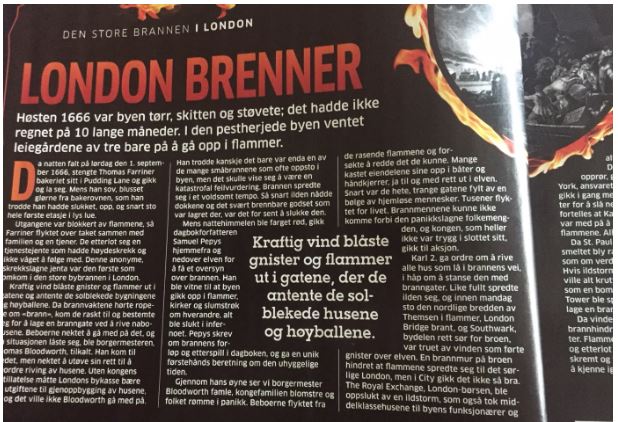
Vedlagt er også ett eksempel fra Aftenpostens(!!!) «Historiemagasin». De oppdaget ikke hvor fullstendig politisk ukorrekt det er å skrive noe slikt. Les ingressen.
Siden Benestad i DN sier at varmebølger ikke ville skjedd i et «stabilt klima» – lurer jeg på hvilken epoke på jorda som hadde slikt klima og om han er klar over hvilken variabilitet klimaet klarer å oppvise UTEN såkalt menneskelig påvirkning.
Tekstene nedenfor gjengis på engelsk, men med redigerte overskrifter. De er i høyeste grad er et LITE utvalg, hentet fra: A Chronological Listing of Early Weather Events av James A. Marusek (Red. anm: Noen av referansetekstene er gjentagelser som er sløyfet for å forbedre lesbarheten) :
Tallene som følger etter tekstlinjene er nummeret på forfatterens originalreferanser.
Severe Winter of 859 – 860 A.D.
During the winter most of the rivers in Europe were frozen for two months.1
The winter of 860 A.D. was very long and very cold [in France]. It lasted from November to April. There was an overabundance of snow. The winter destroyed the [grape] vines. The Rhône River was frozen over its entire length. Wild animals could be taken up by hand. This was followed by a famine.171
The winter was very severe over nearly all of Europe. The Ionian and Adriatic Seas were frozen during 860 A.D.28 [The Ionian Sea is an arm of the Mediterranean Sea, south of the Adriatic Sea, bounded by southern Italy including Calabria, Sicily and the Salento peninsula to the west, southern Albania to the north, and a large number of Greek islands. The Adriatic Sea separates the Italian Peninsula from the Balkan peninsula.]
In the year 859, there was a very severe and long frost [in Britain].72
In the winter of 859-860 in Gaul [Western Europe] and Germany, the winter was very harsh and long. The winter in France lasted from November to April with snow and solid ice. In Italy, the frost was violent and persistent, and the earth was covered with immense snow. The seeds in the ground and the vines froze and died. The wine froze in the cask, where it has been preserved. The mortality rate among people and animals was large, and then a famine broke out, which was terrible in the next year.62
Great Famine In France 1030 – 1032 A.D.
From 1030-32 the whole course of nature seemed to be upset, and there were intense cold in the summer and oppressive heat during the winter. Rains and frost came out of season and for three years there were neither a period for planting seeds or for harvesting. The miseries of mankind in France at that time were incredible. Also there was a fear of the coming of the end of the world coinciding with the 1,000th anniversary of the Crucifixion. Thousands upon thousands died of starvation, and the living were too weak to bury the dead. There were many horrible instances of cannibalism and human flesh was said to have been exposed for sale in the market at Tournus. In their maddened condition, the peasants exhumed human bodies from graves and gnawed the bones.84
Excessive rainfall and humidity was the main cause of the terrible famine of 1030 to 1033 in France. The ground was incessantly drenched by rainfall. Farmers waited in vain for a favorable time for sowing their crops. The soil remained so soaked for three years, that it didn’t offer a single furrow to receive grain. These floods offered a sad triumph over the weeds in the fields. Bushel of seed brought only a pint in the best land and the pint itself only a few grains.79
Great drought of 1135 A.D.
In 1135 [in Europe], the heat and drought were extremely high. The pastures and the crops were scorched, and it was followed by a great dearth and famine. The rivers and springs dried up. The heaths of the mountains [small shrub with tiny evergreen leaves and pink or purple flowers] and the dry forests caught fire, allegedly from the glow of the sun’s rays. The Rhine River [in Germany] was almost completely dry and could be crossed on foot in several places.62
In 1135, so great a drought and heat, that all grass and corn [grain] were burnt up. Dearth and a great famine followed. Rivers and springs were dried up. Mountains and woods were burnt up. And many places were said to be set on fire by the sun. The Rhine River was so dried up, that one might safely ford it in any place.72
From 1135-37 in England, there was a great drought and famine.57, 72, 91
Severe Winter of 1407 – 1408 A.D.
In December 1407, began a frost of such violence and continuance, that the like was never heard of in England. It lasted fifteen weeks, and being accompanied with abundance of snow, it was greatly destructive to the smaller birds.39
In England in 1407, the frost lasted fourteen weeks; small birds perished. In the Baltic Provinces in 1408 the frost was very severe.47, 93 [Baltic Provinces in this time period were the Hanseatic League Baltic provinces of Estonia and Latvia.]
In 1408, the vines and fruit trees in France were killed [by the extreme cold].58, 80
In 1408, the Danube River freezes over its entire length. The ice stretches uninterrupted from Norway into Denmark. Carts cross the Seine River in France on the ice.60
In 1408, carts traveled on the ice across the frozen Seine River in France. The Danube River across its entire course was frozen, and the Maas [Meuse] River was frozen. The ice extends without interruptions from Norway to Denmark, so that the wolves invaded from the north into Jutland.62
In the year 1408 «The winter of this year, ruled strictly in Northern Europe to the banks of the Danube, and was the cruelest in 500 years. The winter was so long that it stopped by Feast of St. Martins (11 November) by the end of January, and so severe that the roots of the vines and fruit trees froze to death.» 62
Hot Summer of 1420 A.D.
The weather in 1420 was exceptionally good for the wine in Dijon, France. They drank the new vintage on 25 August, which was about 30 days ahead of the average time. In the first days of April, the farmers came to the door of the cathedral at Metz, France to offer lilies of the valley. On 10th of April, the strawberries were ripe. On 22 June, the grapes were crushed. On 22 July the harvest was completed. And they drank at the end of the month, the new wine.62
On 7 April 1420 [in Germany], the roses bloomed and cherries and strawberries were picked. In June grapes and peaches were ripe. On 8 June there was frost and snow but it did little damage. The autumn was beautiful.172
Winter of 1420 / 1421 A.D. [In Europe], the winter was so mild that in April 1421 there were cherries and in May grapes.62
Draught of 1472 – 1475 A.D.
Hungary, England and France had drought In 1473. There was a most droughty summer and so hot that woods took fire. All rivers dried up. The Danube River could be walked over in Hungary. This drought continued for 3 years. 72
The summer of 1473 was very hot in France. The heat lasted from June until December 1. There was neither cold nor frost before Candlemas [2 February 1474]. 79
The heat and drought in the year 1473 was so intense that the forests caught fire. All the rivers were dry. In Hungary one could wade across the Danube River. This drought lasted three years. In Dijon, France, the harvest began on 29 August. The heat around Metz, France, that year was so strong that on 1 May cherries were sold, and on the Feast of Saint Peters [June 29] ripe grapes were sold. The harvest was over in August. Legumes could not be harvested due to the drought. 62
In England, there was a great drought and heat during 1473-75 after the two comets of 1472. 47, 72
Severe Winter of 1594 – 1595 A.D.
Europe experienced a cold winter. The Lagoons of Venice froze and didn’t thaw until February 1595.28
London, Frost Fair of 1608
In 1594, the sea froze on the coast of Marseille, France.79
In 1594, the Rhine River in Germany, the Po River in Italy were frozen as well as the sea at Marseilles, France and Venice, Italy.62
In Europe, the Rhine and Scheldt Rivers, and the Adriatic Sea at Venice froze.47, 90, 93
In 1594, the rivers of Northern Europe were frozen before Christmas. The Cattegat froze, together with a large part of the Baltic Sea. The Sea of Venice froze so that during three weeks no boats could be used. The Tiber River froze at Rome, Italy and men crossed it on the ice, a thing never known before or since.63
The extreme cold of the winter of 1594-95 began on 23 December 1594. The cold weather began again on 13 April 1595, which was as cold as Christmas, 1594. This period brought about many sudden deaths in Paris, France «particularly in young children and women”. The Rhine River in Germany, the Po River in Italy and the lagoons of Venice were all frozen. 62
Støtt oss ved å dele:
9 kommentarer
For lesere som vil lagre Maruseks kronologi over tidlige værhendelser, gjør vi oppmerksom på at enkelte av hans kilder trenger noe kvalitetskontroll.
Som eksempel kan nevnes kildene 91-93 Cornelius Walford, The Insurance Cyclopaedia, Volume III-V, London & New York, 1874 til 1878. Derfra kommer «hendelsen»: 68 A.D. [In England, there was a volcanic eruption followed by an inundation of the sea [tsunami]. The Isle of Wight separated from Hampshire.92]
Man må imidlertid ca 60 millioner år tilbake i tid for å finne eksempler på vulkanutbrudd i Storbritannia.
Ganske kort – her er en fersk rapport datert 29. juni 2019: som muligens har interesse:
» No experimental evidence for the significant anthropogenic climate change»
Carl Wilhelm Leo:
Særdeles interessant artikkel som ALLE burde lese – spesielt CICERO Senter for klimaforskning.. 🙂
Insisteringen på historisk stabilt klima (i kontrast til påstandene om vår tids «klimaendringer») er en «CO2-hypotese reparerende» IPCC-konstruksjon fra tiden etter 1990-rapporten. Dvs. da IPCC (redelig nok, den gang) kom i skade for å publisere en graf som viste tydelig den varme middelalder og den lille istid. For framvisningen av disse tydelige historiske klimavariasjonene kom selvsagt i åpenbar konflikt med CO2-hypotesen: Den varme middelalder hadde jo mye lavere CO2-nivå enn i dag. Og verre: Den påfølgende lille istid kom samtidig med ØKTE CO2-nivåer. Arbeidet med historiske temperaturrevisjoner startet dermed raskt, og kulminerte med IPCCs 2001-rapport, der Michael Mann et al sin hockeykølle «fortjenstfullt» hadde bortimot radert ut både varm middelalder og lille istid, og konstruert det berømte oppadpekende køllebladet til slutt. Målet hadde her helliget midlene til de grader, lærte vi etter hvert som kritikken plukket både metode og databruk i filler….
Deretter gikk de samme IPPC-leverandører løs på den «problematiske» (varme) mellomkrigstiden som ble etterfulgt av flere kalde tiår etter andre verdenskrig – på STIGENDE CO2-nivåer, som igjen falsifiserte IPCCs CO2-hypotese. Nå er snart den varme mellomkrigstiden og den kalde etterkrigstiden revidert helt bort også. Det er følgelig både ubehagelig og forstemmende for vitenskapens ære å gå inn og sjekke dagens IPCC-grafer mot deres egne for snart 30 år siden. Men alt for å forsvare dagens narrativ: Påstandene om dagens «dramatiske klimaendringer» blir tydeligvis ikke skremmende nok uten at man presenterer et mest mulig stabilt fortidig klimabilde.
Som man lærte på de gode gamle fagforeningskursene: «Stemmehøyde stiger oftest omvendt proporsjonalt med argumentenes relevans».
PS: 90 modige italienske forskere synger ut om tvilsom IPCC-vitenskap:
Vi noterer samtidig at 90 tunge italienske forskere har sendt ut en petisjon til landets toppmyndigheter om at dagens IPCC-modellpremisser svikter vitenskapelig, og at CO2-hypotesen fremdeles står empirisk uverifisert: https://blog.friendsofscience.org/2019/07/03/italian-scientists-reject-anthropogenic-global-warming/amp/
Det kunne vært interessant å få en kommentar hos Klimarealistene på denne saken, da det her ikke er snakk om lettvektere som kan overses eller latterliggjøres, jfr. underskriftlisten, og kan signalisere at flere enn emerituser etter hvert tør å ta bladet fra munnen.
Denne petisjonen fra 90 Italienske vitenskapsmenn blir temaet i neste ukes Klimanytt, som distribueres til Sotrtingsrepresentantene, til våre medlemmer og alle andre interesserte.
De siste årene har jeg fundert på om det er noe som kan gjøre at årstidene forskyver seg, og nå tror jeg at jeg har funnet svaret.
«Det er jordbanens helning som gjør at vi har årstider og at polarsirkelen forflytter seg. Presesjon viser hvordan jordaksen snurrer rundt som en snurrebass i ferd med å miste farten, samtidig som jorda roterer rundt sin egen akse. Aksen (eller Nordpolen) vil derfor ikke alltid peke mot Nordstjernen slik som i dag, med den konsekvens at årstidene forskyver seg. Det tar i gjennomsnitt 21 000 år for årstidene å forflytte seg en hel runde. Milankovitch-faktorene er de ytre drivkreftene» https://www.ngu.no/emne/klimavariasjoner
De bruker gjennomsnitt 21.000 år på en runde, mens astronomer bruker ca 26.000 år, og kaller dette et astronomisk storår.
Det tar ifølge NGU 11.000 år før 21 desember blir 21 juni. Hvordan var klimaet for 11.000 år siden da alt var motsatt?
DEN YNGRE DRYAS (12.800-11.700 år før nåtid), som markerer avslutningen på siste istid… https://snl.no/dryas
Det kan bety at den yngre Dryas befant seg i det vi kaller vinterhalvåret i et astronomisk storår, og at vi nå har befunnet oss ett eller annet sted i sommerhalvåret
Noen som har noen tanker om det?
Interessant problemstilling som det sikkert fins mange grunner å ta en grundig kikk på av
de kompetente. Spørsmålet viser jo klart hvor komplisert hele spørsmålet rund Klima er
og slike bastante konklusjoner som FN og etterhvert politikere og sjarlataner henger seg på
og gjør til moteriktige «Sannheter» er det rene nonsens. Noe er likevel fastslått av uavhengige,
slik som «Klimarealistene» siterer og viser begrunnede og tydelige beregninger, tabeller og
fakta-opplysninger fra. Når det har gått så langt at en Svensk jente med absurde påstander og skremselspropaganda overfor barn og unge, blir gjort til den nye Messias i Klimaspørsmål av politikere,
kirkesamfunn og andre hysterikere, da er det liksom slutt på det som omfattes av vitenskap og forskning
omkring Jordens Klima i fortid, nåtid og fremtid: Dette Gretha Thunberg fenomenet har allerede skremt barn til psykiske sammenbrudd med nødvendig helsehjelp til følge. På tide at foreldre og foresatte fatter hvor ille det er, de bør fortelle sitt avkom at vær og Klima er utenfor menneskets rekkevidde hva kontroll og påvirkning angår! Selv guder kan ikke gjøre noe!
Se bl.a. KN 116. Også vårt nye hefte om naturen Figur 4.4.
Bare et tips: Jeg vil gjerne lese det heftet du henviser til (og betale for det), men jeg vil gjerne ha det i PDF-format slik at jeg kan laste det ned på PC-en. Er det mulig å få til ?


For lesere som vil lagre Maruseks kronologi over tidlige værhendelser, gjør vi oppmerksom på at enkelte av hans kilder trenger noe kvalitetskontroll.
Som eksempel kan nevnes kildene 91-93 Cornelius Walford, The Insurance Cyclopaedia, Volume III-V, London & New York, 1874 til 1878. Derfra kommer «hendelsen»: 68 A.D. [In England, there was a volcanic eruption followed by an inundation of the sea [tsunami]. The Isle of Wight separated from Hampshire.92]
Man må imidlertid ca 60 millioner år tilbake i tid for å finne eksempler på vulkanutbrudd i Storbritannia.
Ganske kort – her er en fersk rapport datert 29. juni 2019: som muligens har interesse:
» No experimental evidence for the significant anthropogenic climate change»
https://arxiv.org/pdf/1907.00165.pdf
Carl Wilhelm Leo:
Særdeles interessant artikkel som ALLE burde lese – spesielt CICERO Senter for klimaforskning.. 🙂
Insisteringen på historisk stabilt klima (i kontrast til påstandene om vår tids «klimaendringer») er en «CO2-hypotese reparerende» IPCC-konstruksjon fra tiden etter 1990-rapporten. Dvs. da IPCC (redelig nok, den gang) kom i skade for å publisere en graf som viste tydelig den varme middelalder og den lille istid. For framvisningen av disse tydelige historiske klimavariasjonene kom selvsagt i åpenbar konflikt med CO2-hypotesen: Den varme middelalder hadde jo mye lavere CO2-nivå enn i dag. Og verre: Den påfølgende lille istid kom samtidig med ØKTE CO2-nivåer. Arbeidet med historiske temperaturrevisjoner startet dermed raskt, og kulminerte med IPCCs 2001-rapport, der Michael Mann et al sin hockeykølle «fortjenstfullt» hadde bortimot radert ut både varm middelalder og lille istid, og konstruert det berømte oppadpekende køllebladet til slutt. Målet hadde her helliget midlene til de grader, lærte vi etter hvert som kritikken plukket både metode og databruk i filler….
Deretter gikk de samme IPPC-leverandører løs på den «problematiske» (varme) mellomkrigstiden som ble etterfulgt av flere kalde tiår etter andre verdenskrig – på STIGENDE CO2-nivåer, som igjen falsifiserte IPCCs CO2-hypotese. Nå er snart den varme mellomkrigstiden og den kalde etterkrigstiden revidert helt bort også. Det er følgelig både ubehagelig og forstemmende for vitenskapens ære å gå inn og sjekke dagens IPCC-grafer mot deres egne for snart 30 år siden. Men alt for å forsvare dagens narrativ: Påstandene om dagens «dramatiske klimaendringer» blir tydeligvis ikke skremmende nok uten at man presenterer et mest mulig stabilt fortidig klimabilde.
Som man lærte på de gode gamle fagforeningskursene: «Stemmehøyde stiger oftest omvendt proporsjonalt med argumentenes relevans».
PS: 90 modige italienske forskere synger ut om tvilsom IPCC-vitenskap:
Vi noterer samtidig at 90 tunge italienske forskere har sendt ut en petisjon til landets toppmyndigheter om at dagens IPCC-modellpremisser svikter vitenskapelig, og at CO2-hypotesen fremdeles står empirisk uverifisert:
https://blog.friendsofscience.org/2019/07/03/italian-scientists-reject-anthropogenic-global-warming/amp/
Det kunne vært interessant å få en kommentar hos Klimarealistene på denne saken, da det her ikke er snakk om lettvektere som kan overses eller latterliggjøres, jfr. underskriftlisten, og kan signalisere at flere enn emerituser etter hvert tør å ta bladet fra munnen.
Denne petisjonen fra 90 Italienske vitenskapsmenn blir temaet i neste ukes Klimanytt, som distribueres til Sotrtingsrepresentantene, til våre medlemmer og alle andre interesserte.
De siste årene har jeg fundert på om det er noe som kan gjøre at årstidene forskyver seg, og nå tror jeg at jeg har funnet svaret.
«Det er jordbanens helning som gjør at vi har årstider og at polarsirkelen forflytter seg. Presesjon viser hvordan jordaksen snurrer rundt som en snurrebass i ferd med å miste farten, samtidig som jorda roterer rundt sin egen akse. Aksen (eller Nordpolen) vil derfor ikke alltid peke mot Nordstjernen slik som i dag, med den konsekvens at årstidene forskyver seg. Det tar i gjennomsnitt 21 000 år for årstidene å forflytte seg en hel runde. Milankovitch-faktorene er de ytre drivkreftene» https://www.ngu.no/emne/klimavariasjoner
De bruker gjennomsnitt 21.000 år på en runde, mens astronomer bruker ca 26.000 år, og kaller dette et astronomisk storår.
Det tar ifølge NGU 11.000 år før 21 desember blir 21 juni. Hvordan var klimaet for 11.000 år siden da alt var motsatt?
DEN YNGRE DRYAS (12.800-11.700 år før nåtid), som markerer avslutningen på siste istid… https://snl.no/dryas
Det kan bety at den yngre Dryas befant seg i det vi kaller vinterhalvåret i et astronomisk storår, og at vi nå har befunnet oss ett eller annet sted i sommerhalvåret
Noen som har noen tanker om det?
Interessant problemstilling som det sikkert fins mange grunner å ta en grundig kikk på av
de kompetente. Spørsmålet viser jo klart hvor komplisert hele spørsmålet rund Klima er
og slike bastante konklusjoner som FN og etterhvert politikere og sjarlataner henger seg på
og gjør til moteriktige «Sannheter» er det rene nonsens. Noe er likevel fastslått av uavhengige,
slik som «Klimarealistene» siterer og viser begrunnede og tydelige beregninger, tabeller og
fakta-opplysninger fra. Når det har gått så langt at en Svensk jente med absurde påstander og skremselspropaganda overfor barn og unge, blir gjort til den nye Messias i Klimaspørsmål av politikere,
kirkesamfunn og andre hysterikere, da er det liksom slutt på det som omfattes av vitenskap og forskning
omkring Jordens Klima i fortid, nåtid og fremtid: Dette Gretha Thunberg fenomenet har allerede skremt barn til psykiske sammenbrudd med nødvendig helsehjelp til følge. På tide at foreldre og foresatte fatter hvor ille det er, de bør fortelle sitt avkom at vær og Klima er utenfor menneskets rekkevidde hva kontroll og påvirkning angår! Selv guder kan ikke gjøre noe!
Se bl.a. KN 116. Også vårt nye hefte om naturen Figur 4.4.
Bare et tips: Jeg vil gjerne lese det heftet du henviser til (og betale for det), men jeg vil gjerne ha det i PDF-format slik at jeg kan laste det ned på PC-en. Er det mulig å få til ?